Containment that prevents cross-contamination
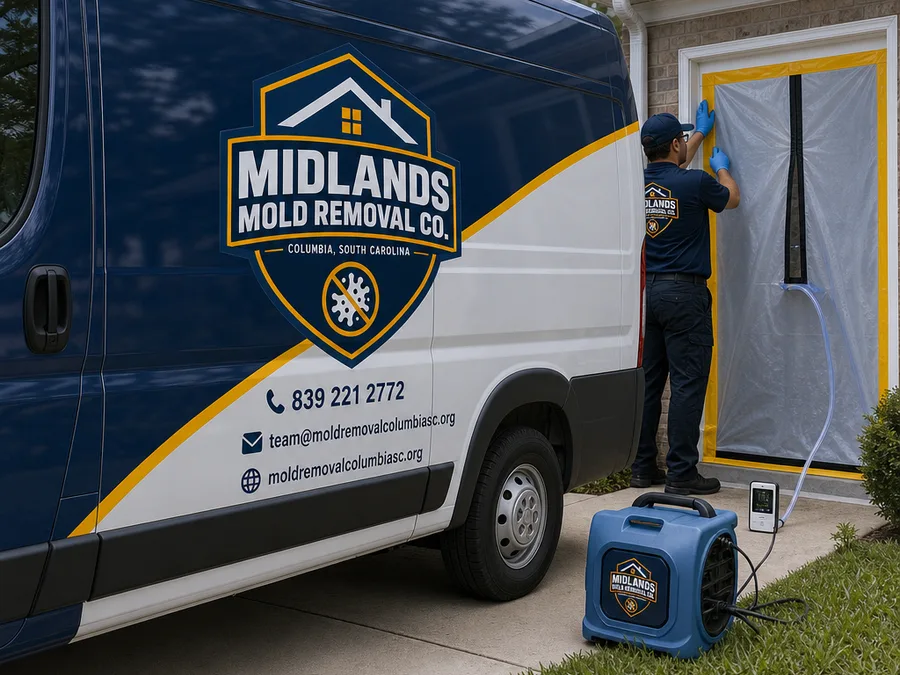
Work areas are isolated with plastic sheeting and controlled airflow so spores and dust stay inside the remediation zone, not in hallways, bedrooms, or office areas.
Serving Columbia, South Carolina & surrounding areas
If you smell a musty odor, see staining, or have had a leak, we contain the problem fast, remove contaminated materials safely, and return the space to a clean, dry condition.
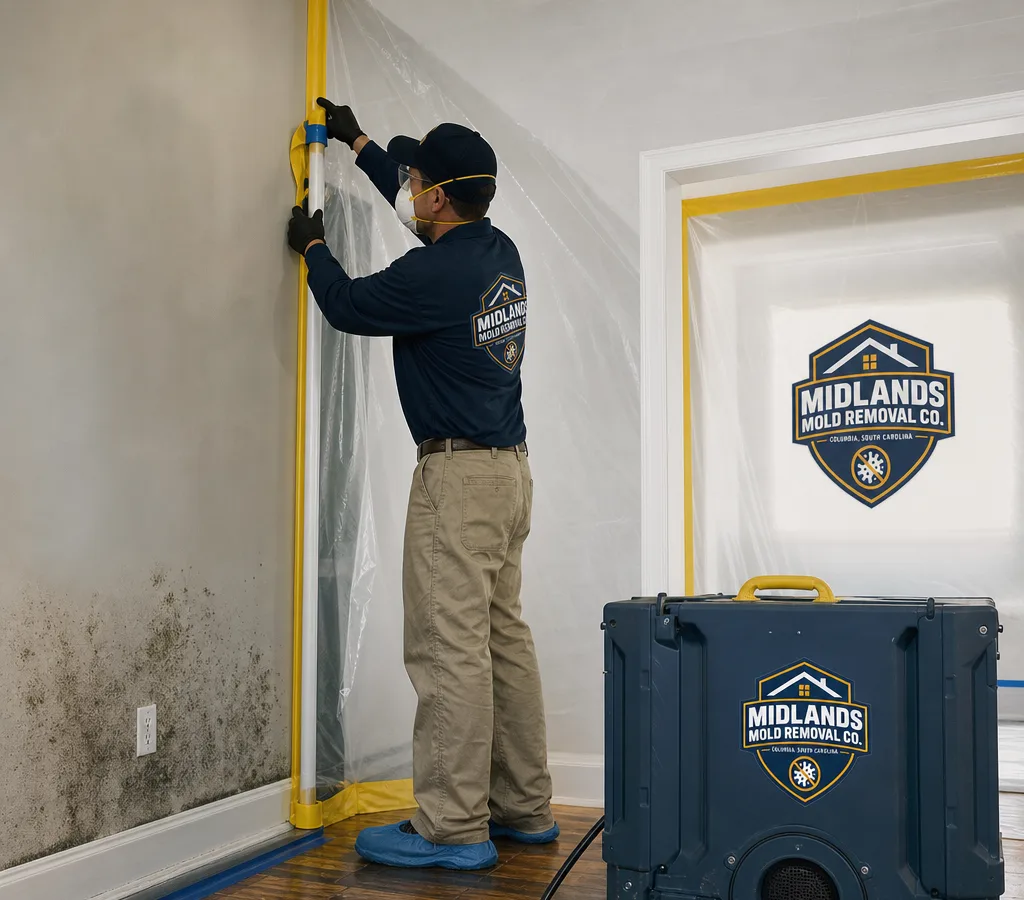
When you search for mold remediation Columbia SC, you are usually trying to solve two problems at once: stop mold from spreading and make the building safe to use again. Midlands Mold Removal Co. handles remediation as a controlled cleanup project, not a quick surface wipe. That means setting containment, using negative air filtration, removing or cleaning affected building materials the right way, and correcting the moisture conditions that allowed growth in the first place.
Mold can follow water. In the Columbia area, common triggers include roof leaks, plumbing failures, HVAC condensation issues, wet crawlspaces, and damp drywall after a flood or storm. Even small, repeated moisture—like a slow supply line leak under a sink—can lead to hidden growth behind cabinets or baseboards. Our broader mold removal work starts with the same careful inspection mindset: find the source, map the affected areas, and build a scope that matches the real conditions.
Work areas are isolated with plastic sheeting and controlled airflow so spores and dust stay inside the remediation zone, not in hallways, bedrooms, or office areas.
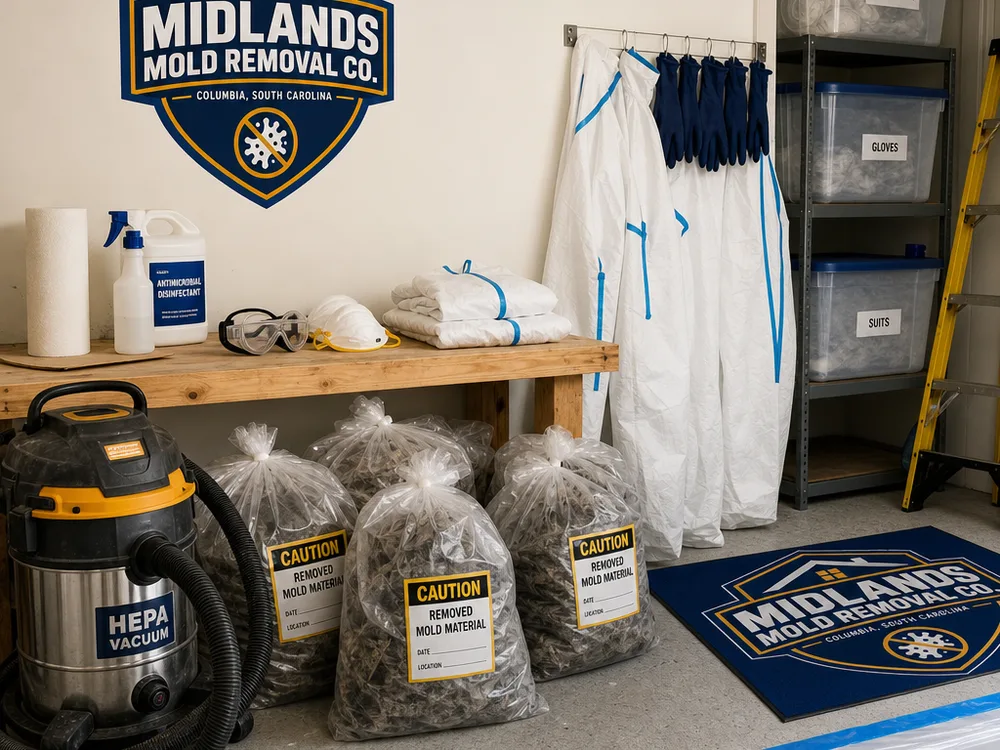
We use HEPA air scrubbers and HEPA vacuums, then remove contaminated porous materials that cannot be reliably cleaned, like heavily impacted drywall, insulation, and carpet padding.
Non-porous and semi-porous materials may be cleaned using damp wiping, HEPA vacuuming, and appropriate antimicrobial treatments when the material can be saved.
Remediation that ignores moisture fails. We identify likely sources, recommend fixes, and verify drying with moisture readings so the same conditions do not return.
You should know what areas were affected, what was removed, what was cleaned, and what needs repair afterward so rebuilding is straightforward.
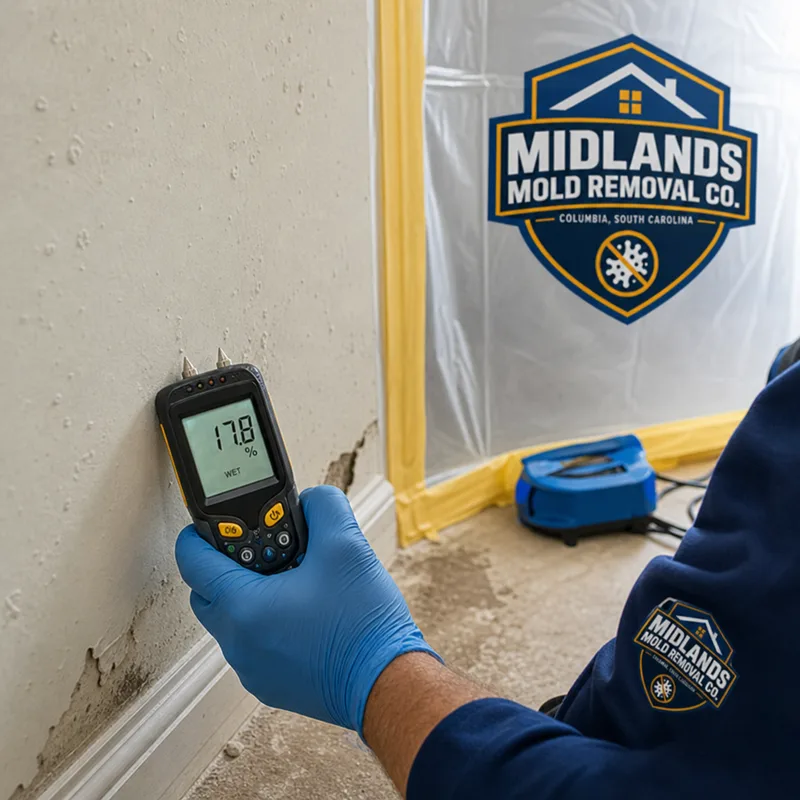
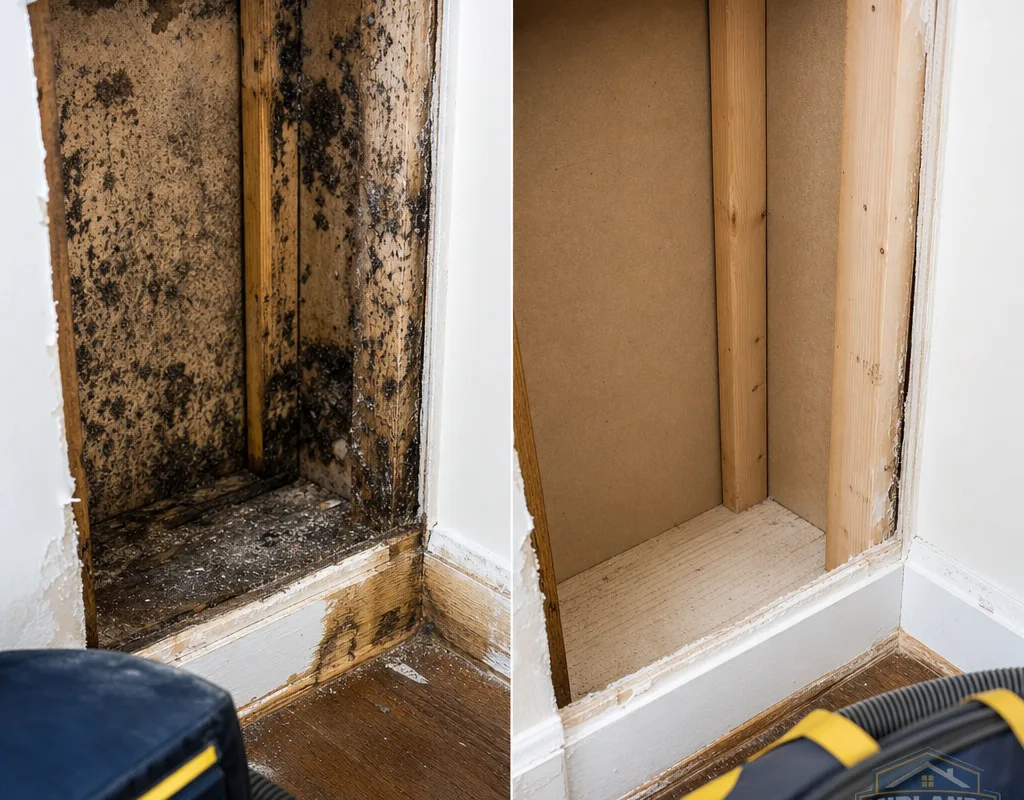
Many mold problems are larger than the visible spot. In real homes and commercial spaces around Columbia, we often find growth in places where air is still and moisture lingers.
Common locations we investigate during mold remediation in Columbia, SC include:
Neighborhood patterns vary, but the building science stays the same. In Shandon and Forest Acres, older homes may have more penetrations, additions, and aging plumbing that make slow leaks harder to spot. In Irmo and Lexington-area subdivisions, tight building envelopes and high indoor humidity can turn a small condensation issue into a bigger one quickly, especially around HVAC and closets. Downtown Columbia commercial spaces often have shared walls and above-ceiling pathways where contamination can travel if containment is not done carefully.
If you suspect hidden growth, the most useful first step is an on-site assessment with moisture checks, a walkthrough of the water history, and a plan that prioritizes containment before demolition or aggressive cleaning.
We start by identifying affected areas, likely moisture sources, and any access constraints. You get a written plan for what will be contained, cleaned, and removed.
We set critical barriers and, when needed, establish negative pressure with HEPA-filtered air scrubbers. This limits spore movement during work.
Porous materials that cannot be cleaned are removed and bagged out carefully. We avoid unnecessary demolition while still reaching impacted cavities when required.
Remaining surfaces inside the containment zone are HEPA vacuumed and cleaned. We focus on dust control because settled particulate can reintroduce odor and irritation.
Drying equipment may be used depending on conditions. We check moisture levels to confirm materials are trending dry and the underlying issue has been addressed.
We leave the area clean and ready for repairs and rebuild. If a third-party clearance test is part of your plan, we coordinate work so the space is ready when the inspector arrives.
Most mold remediation projects in Columbia typically range from about $1,500 to $6,500+, with small, contained cleanups at the low end and larger jobs involving multiple rooms, crawlspaces, or significant drywall removal at the high end.
Final price depends on the size of the affected area, where the growth is located—attic, crawlspace, or behind cabinets—how much demolition is needed to access it, the level of containment required, and whether drying equipment is necessary. The exact cost is confirmed after an on-site inspection and a written scope of work.
Most projects take 1 to 3 days for active remediation work, but timelines vary with demolition needs and drying time. A small area with straightforward access may be completed in a day, while a crawlspace or multiple rooms can take longer because containment, careful removal, and moisture verification take time. If drying equipment is required, that can extend the schedule even when the cleanup work is finished.
Often yes when the affected area can be fully contained, but it depends on where the work is and who lives in the home. If remediation is in a bedroom, a main hallway, or near the HVAC return, temporary relocation from that area can make sense. Households with asthma, severe allergies, elderly occupants, or infants should be more cautious; we can explain what the containment plan means for day-to-day living while work is underway.
Heavily impacted porous materials like drywall, insulation, and carpet padding are typically removed because they cannot be reliably cleaned. Semi-porous or non-porous materials may be cleaned and retained if the contamination is surface-level and the material is structurally sound. The decision is made during inspection based on what is affected and what it would take to access and treat the full extent.
Mold comes back when moisture returns, not because remediation was performed once. Common reasons include unresolved roof or plumbing leaks, humid crawlspaces, HVAC condensation issues, or indoor humidity that stays high. A good remediation plan includes identifying the likely moisture source and confirming materials are drying, so repairs and humidity control can be addressed before rebuild.
Yes. Crawlspaces are a common place for persistent moisture and microbial growth, and remediation often involves containment at access points, careful removal of impacted insulation or debris, HEPA cleaning, and drying. Because crawlspace conditions are driven by moisture and airflow, we also focus on what is allowing dampness to persist so the problem does not repeat after cleanup.
Sometimes, depending on the cause of loss and the policy language. Mold tied to a sudden covered event—for example, a burst supply line—is more likely to qualify than long-term seepage or deferred maintenance. We can provide documentation of the observed conditions and the remediation scope so you have what you need for a claim conversation, and you can confirm coverage directly with your carrier.
Tell us what you are seeing and any recent water history. We will assess the affected areas, explain containment and cleanup steps, and provide a written scope you can make decisions from.