Crawl space and subfloor moisture
Crawl spaces can stay humid and drive odors up into living areas. Testing helps verify whether spores are coming from below the floor system or from another source.
Serving Columbia, South Carolina & surrounding areas
Get clear, documented results from a certified inspection so you can make the right next decision for your home or building.
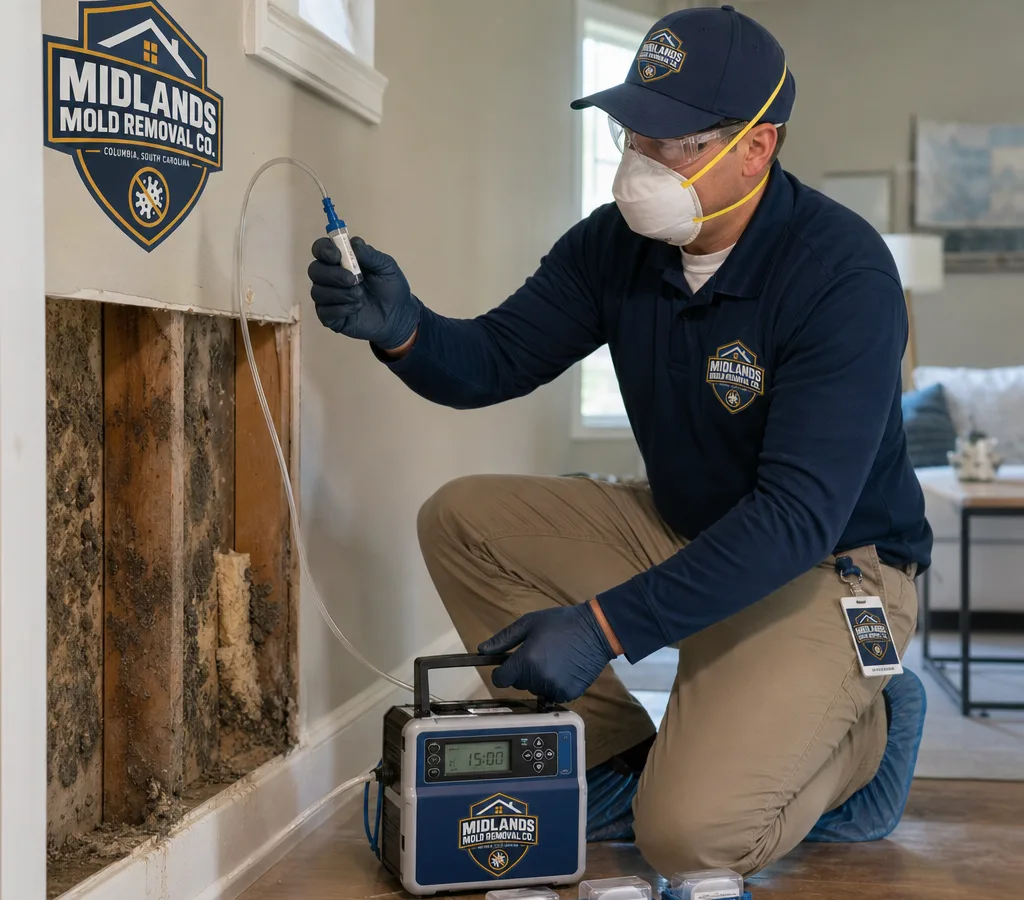
If you are searching for mold testing Columbia SC, you are usually trying to answer one practical question: is mold present at a level that needs professional action, and where is it coming from? A good test does not guess based on smell alone. It documents conditions, collects the right samples, and ties the results back to what is happening in the building.
Testing is most useful when:
In the Columbia area, warm weather and humidity can keep materials damp longer after a plumbing leak or HVAC issue, especially in basements, crawl spaces, and around supply boots. Mold testing helps separate normal background spores from an indoor source that is actively growing on building materials.
A proper mold inspection is more than taking a quick air sample. Our process is built to produce results you can use: a written explanation of what was found, what it likely means, and what to do next.
Typical scope includes:
Midlands Mold Removal Co. focuses on collecting the right samples, labeling and handling them correctly, and ordering tests based on what the building is telling us. If you already know you need cleanup, you can also start by discussing mold removal so the testing and the next steps stay coordinated.
Crawl spaces can stay humid and drive odors up into living areas. Testing helps verify whether spores are coming from below the floor system or from another source.
Registers, return plenums, and areas around air handlers can develop mold when condensation persists. Sampling can confirm whether the HVAC system is contributing to airborne spores.
Even when materials look dry, wall cavities and insulation can hold moisture. Testing and moisture checks help decide whether drying is enough or removal is required.
Buyers and sellers use mold testing to reduce uncertainty. A written report is easier to act on than a verbal opinion.
Odors often come from hidden growth behind baseboards, under flooring, or in damp storage areas. A structured inspection and sampling plan helps narrow the search.
We start with the property history: any leaks, HVAC issues, recent repairs, and where odors or symptoms are noticed. Then we inspect the areas most likely to hold moisture and growth.
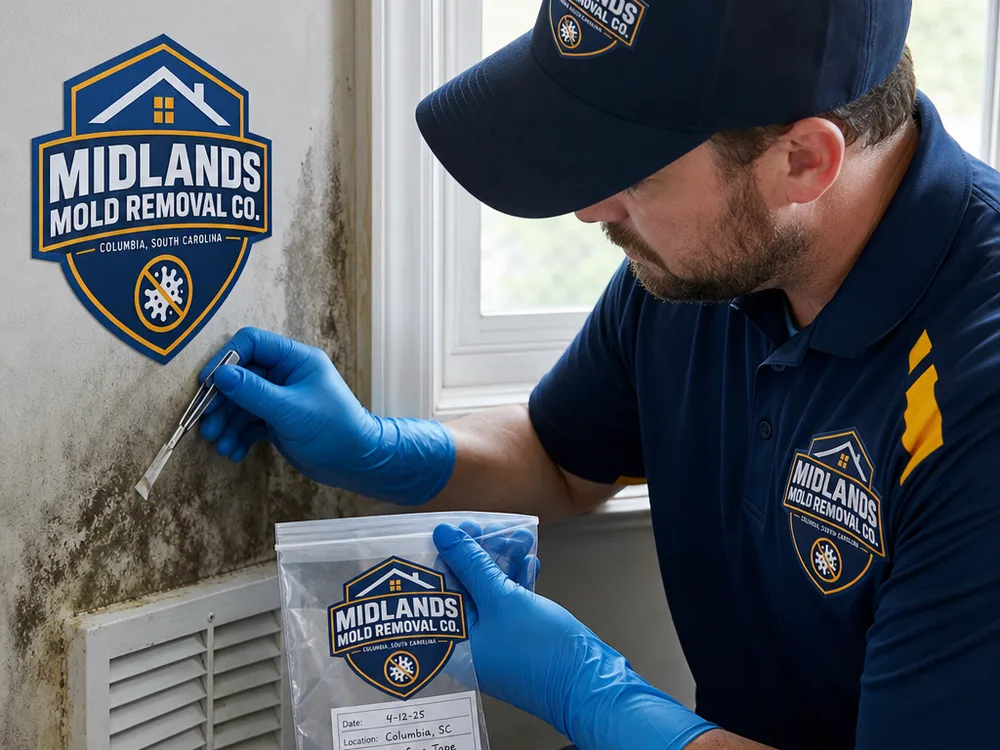
Not every job needs every sample type. We select air, surface, or a combination based on what we can observe and measure, and we include an outdoor baseline to interpret results.
Samples are labeled, logged, and handled to reduce contamination risk. This is what makes lab results defensible and useful for decision-making.
You receive lab findings with plain-language notes on what the numbers indicate, where an indoor source is suspected, and what the logical next step is.
If results point to a problem, we explain options such as targeted cleaning, controlled removal of affected materials, or source correction steps like drying and humidity control.
Mold testing in Columbia typically ranges from about $250 to $750 for most homes, depending on the number of samples and how much of the property needs to be evaluated. A basic inspection with 1 to 2 air samples often falls in the lower end, while larger homes, multiple indoor air samples, and added surface sampling can push the total higher.
Final pricing mainly depends on sample count, accessibility such as attics, crawl spaces, and tight utility areas, and whether there is a known water event that requires broader documentation. The exact cost is confirmed after the on-site inspection and the sampling plan is agreed on.
Small changes can affect sampling results. If you want a clearer snapshot of what is in the air on a normal day, avoid heavy cleaning, running air purifiers, or opening windows for long periods right before the appointment. If you have to run the HVAC for comfort, that is fine. Just tell us what has been running and for how long.
After you receive your report:
If you are working with a buyer, seller, landlord, or property manager, a written report with photos and sample locations helps keep everyone aligned on scope and responsibility.
Most lab results are available within a few business days, and we deliver your written findings as soon as the lab report is received. Timing can vary with sample volume and lab workload, but you should expect clear communication on the expected turnaround at the inspection.
Yes, an outdoor control sample is the standard reference point for interpreting indoor air samples. Without it, it is harder to tell whether indoor counts reflect an indoor source or simply normal outdoor spores coming in through doors, windows, and ventilation.
Air testing is useful for understanding what is airborne in occupied areas, but surface sampling is often the better choice when there is visible suspect growth you want to confirm. Many inspections use both when there is a specific area of concern and you also want to know whether spores are affecting the rest of the home.
Yes, in most cases you can stay home during the inspection and sampling. We may ask that people and pets stay out of the immediate sampling area for a few minutes so the air sample represents the room and not extra disturbance.
Testing can strongly suggest an indoor source and help narrow the likely area, but it does not see through walls. When results point to a hidden issue, the next step is usually targeted investigation based on moisture readings, building layout, and the history of leaks or condensation.
Post-remediation verification is a common reason to test, especially when the affected area was large or the building is occupied by sensitive individuals. A follow-up inspection with air sampling can confirm conditions have returned to normal background levels before the space is fully put back into use.
Tell us what you are seeing or smelling and where it is happening in the property. We will schedule a mold inspection and testing plan that fits the situation and deliver a report you can act on.